
From Contamination to Clarity: 7 Steps to Managing Your Litchfield County Well Water
Contaminants in the private well water supply are a major concern for homeowners in rural Connecticut. Whether you are dealing with staining or health concerns, understanding the specific minerals in your soil is the first step toward clean water. To help you protect your home and health, we’ve broken down the path to pure water into 7 essential steps. As leading well water filtration system installation specialists in Litchfield County, High Rock Water is here to help you identify, detect, and neutralize these threats in your well water supply.
Step 1: Locate The Town You Live In
In this first step, choose the county in which you reside in CT. This is where we will educate you on the common contaminants specific to your area.
Step 2: Identify The Symptoms From Your Well Water Supply
This second step covers the main issues that can affect your water supply. Here we explain the most common contaminants and conditions, how they appear in your water, and the potential impact they can have on your plumbing, home, and health.
- Hard Water: High levels of dissolved minerals like calcium and magnesium that cause scale buildup in pipes, appliances, and fixtures.
- Staining: Minerals such as iron or manganese can leave reddish, brown, or black stains on sinks, tubs, and laundry.
- Pipe Damage: Corrosive or imbalanced water chemistry can gradually weaken plumbing, leading to leaks and premature pipe failure.
- Low pH: Acidic water that can corrode pipes and fixtures while allowing metals to leach into the water.
- Bacteria: Microorganisms that may enter the water supply and pose potential health risks if not properly treated.
- Dry Skin: Mineral-heavy or chemically imbalanced water can strip natural oils from skin and hair during bathing.
- Discoloration: Changes in water color, often caused by rust, sediment, or dissolved metals in the system.
Step 3: How To Test Your Water Supply
Next for step 3 would be knowing how to test your water supply. You will need to find a local, trusted well water service company that can provide a comprehensive well water test for you. Choosing one like High Rock Water that has a great reputation and has experience solving what contaminants are in their well water supplies.
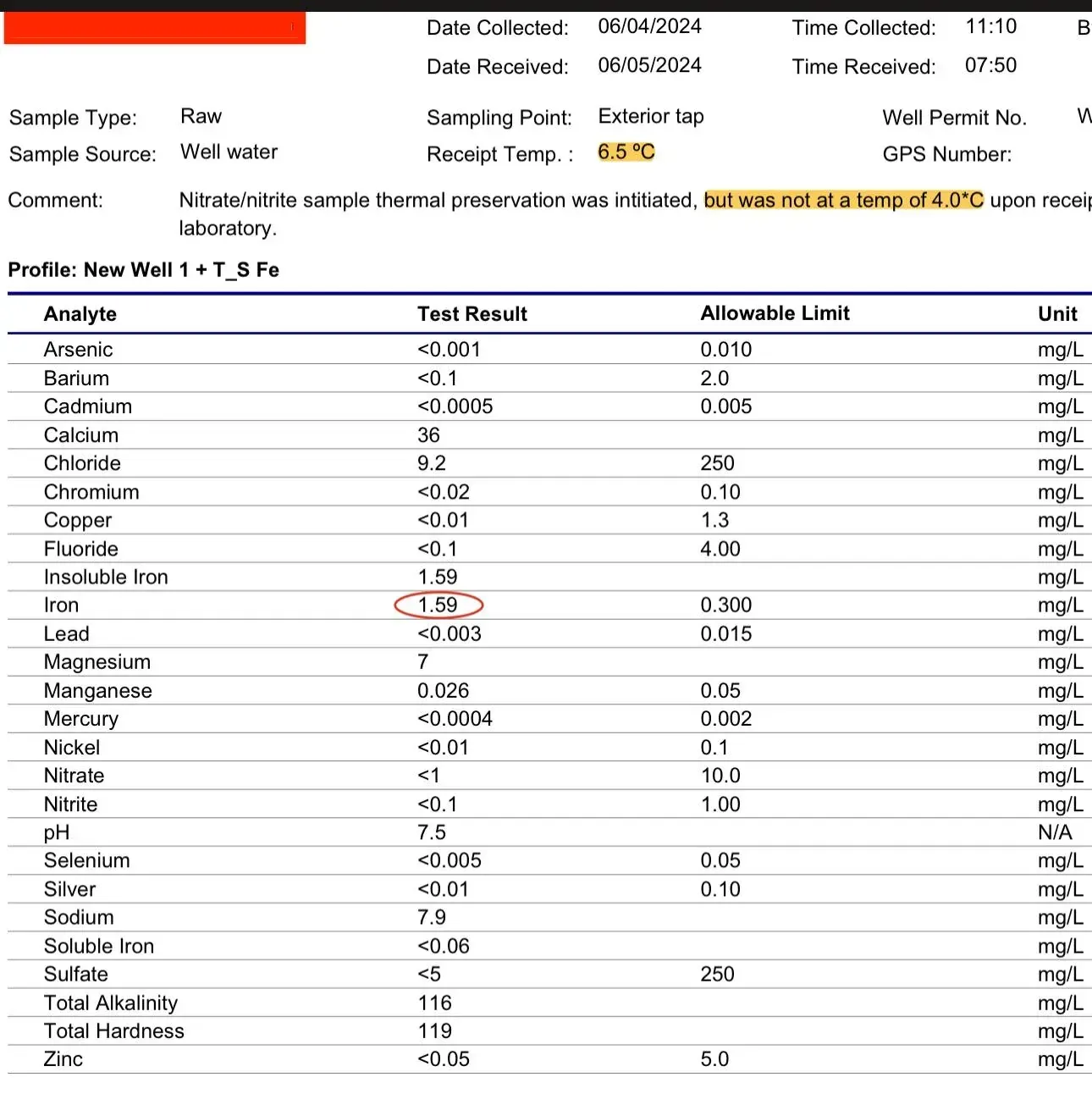
Here is what a well water test results look like:
Step 4: Why Professional Installation Matters
While many homeowners consider DIY "big-box" filters, Connecticut’s unique geology—ranging from the high iron deposits in the Litchfield Hills to the acidic soil in the Naugatuck Valley—requires a customized approach. A "one-size-fits-all" filter often fails to address the specific chemical balance of your local well, leading to ruined appliances and wasted money.
As a specialized well water filtration system installation company, High Rock Water provides commercial-grade solutions tailored to your specific test results.
- Hard Water Solutions: High calcium and magnesium levels cause scale buildup. See our professional well water softener installation options here.
- Bacteria Mitigation: Coliform or E. coli poses serious health risks. Learn how our UV Purification well systems keep your family safe.
- Staining & Iron Removal: Stop the red and brown stains on your fixtures. Browse the best iron filters for CT well water.
- pH Balancing: Neutralize acidic water to prevent pinhole leaks in your copper pipes. Explore our acid neutralizer services.
Professional installation ensures your system is sized correctly for your home's flow rate, meaning you never lose water pressure while your water is being cleaned.
Step 5: Common Well Water Contaminants In Litchfield County
Water quality often varies by region because of local geology, soil composition, and nearby environmental factors. In this step, you’ll review the most common minerals and contaminants found in well water in your area so you can better understand what may appear in your test results and how it could affect your water supply, plumbing, and overall water quality.
- Iron: A naturally occurring metal that can cause reddish-brown staining, metallic taste, and buildup inside plumbing.
- Manganese: Often found alongside iron; it can cause dark staining on fixtures and laundry and may affect the water taste.
- Calcium: A primary contributor to hard water that leads to scale buildup in pipes, heaters, and appliances.
- Magnesium: Another hardness mineral that contributes to scale formation and reduces soap efficiency.
- Sulfur (Hydrogen Sulfide): Produces a strong “rotten egg” odor in water and can cause corrosion or discoloration.
- Sediment: Sand, silt, or small particles that enter well water and can clog filters, fixtures, and appliances.
- Bacteria: Microorganisms that can enter wells through surface contamination and may pose potential health risks if untreated.
- Nitrates: Often associated with agricultural runoff or septic systems and can affect drinking water safety if levels are high.
Step 6: How To Remove Contaminants From Your Well Water Supply
Once you understand what’s in your water, the next step is choosing the right treatment solution. Different contaminants require different systems, so treatment is typically based on the results of your water test. The right combination of filtration and purification systems can remove minerals, eliminate bacteria, and improve the overall quality of your well water.
- Water Softener: Removes hardness minerals like calcium and magnesium to prevent scale buildup and improve soap performance.
- Iron & Manganese Filters: Specialized filtration systems designed to remove metals that cause staining, discoloration, and metallic taste.
- Sediment Filtration: Mechanical filters that capture sand, silt, and debris before they enter plumbing or appliances.
- UV Lighting System: Uses ultraviolet light to neutralize bacteria and microorganisms without adding chemicals to the water.
- Carbon Filtration Systems: Remove odors, unpleasant tastes, chlorine, and certain organic contaminants.
- Whole-House Filtration Systems: Multi-stage systems that treat water as it enters the home, addressing multiple contaminants at once.
Step 7: Schedule A Professional Well Water Test
Don’t guess when it comes to your family’s health and your home's plumbing. A DIY test kit can’t provide the precision needed to design a long-lasting filtration solution.
At
High Rock Water, our licensed professionals provide the most accurate well water analysis in Connecticut. Whether you need a new
well water filtration system installation or a simple system tune-up, we are here to ensure your water is safe, clear, and odor-free. Or call us directly at
203-490-6607 to speak with a CT water specialist.
CT'S Best Well Water Service Professionals
OVER 50 YEARS OF COMBINED EXPERIENCE
Our plumbers have a profound experience on working residential property.
CERTIFIED & LICENSED PLUMBERS
Our plumbers have the latest certifications and trainings to ensure they are educated on new technology.
FREE QUOTES ON ALL SERVICES
At High Rock Water & Mechanical Service, we provide free quotes for any of our customers.
WELL KNOWN IN THE CONNECTICUT AREA
We have been servicing our customers in and around the western and central CT area for over a decade.
HIGHLY RATED ON GOOGLE
Our reviews show how dedicated we are to helping our customers.
100% CLIENT SATISFACTION
Our goal is to have all of our customers to be happy customers and to think of High Rock Water & Mechanical Service whenever they need us.